SteelSeries Sensei Professional evaluate: A top-tier mouse, virtually
You place the second battery in a USB-powered docking station, the place it may be charged while you’re utilizing the primary one. When the battery begins to run low, the mouse alerts you with a flashing LED, permitting you to rapidly swap it for a totally charged one. This implies you’ll be able to primarily take pleasure in limitless battery life with the mouse, minus the half-minute it would take to vary the battery. The method may be very simple and really fast.
Is it extra handy than having a built-in battery and plugging in a USB-C cable now and again to cost whereas it’s in use? Possibly. Possibly not. However you don’t have to fret in regards to the mouse having a tail that restricts your freedom of motion and impacts precision.
Mattias Inghe
SteelSeries Sensei Professional: A brand new strategy to wi-fi connectivity
A single cost is claimed to final for 16 hours in efficiency mode, which implies a excessive polling price of 8 kHz (the mouse can deal with as much as 9 kHz with so-called over-polling). That appears about proper. It’s maybe finest suited to e-sports gamers who want excessive precision or skilled graphic designers who desire a stage of accuracy past the peculiar. If I swap to a extra modest 1 kHz polling price, the battery life will increase to round 60 hours, in keeping with the specs.
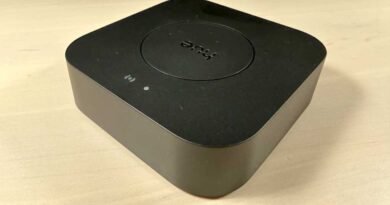
The opposite new characteristic is that it doesn’t talk by way of a 2.4 GHz RF sign or Bluetooth at 2.4 GHz, like virtually all different wi-fi mice. As an alternative, it makes use of the brand new Extremely Wideband (UWB) expertise, and the charging station additionally acts as its receiver. Plug it into a pc to energy the charger, and the mouse will robotically join.
UWB is a wi-fi commonplace primarily designed for short-range positioning, and it is usually utilized in another units, corresponding to digital automobile keys. Right here, it makes use of a excessive frequency of round 6 GHz and, because the title suggests, higher bandwidth per channel to transmit information extra rapidly.
This offers you the good thing about a really excessive polling price and even shorter response instances than is feasible at 2.4 GHz. It’s additionally a lot much less vulnerable to interference. At 2.4 GHz, it’s important to take care of different Bluetooth units and even Wi-Fi for a similar radio spectrum. You’re largely spared that right here. Not that I’ve ever discovered it an issue, however who is aware of – there is likely to be conditions the place it makes a noticeable distinction.