China Unveils Two-Launch Crewed Moon Plan as State-Backed Industrial Rocket Agency Targets 50 Launches
China is accelerating a dual-track house technique that pairs a newly detailed two-launch structure for crewed lunar landings with an aggressive, state-backed restructuring of its business rocket business aimed toward executing greater than 50 launches over the subsequent three years.
The dual developments, disclosed at main aerospace conferences in Beijing and Wuhan this week, illustrate how China is mobilizing each state-run deep-space packages and market-oriented launch suppliers to compete in an more and more crowded world house race.
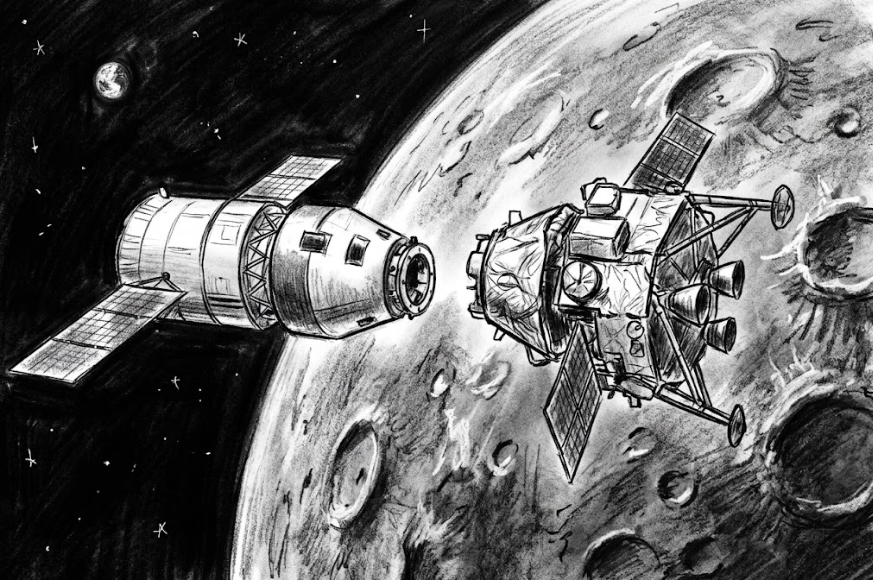
On the Seventh Manned Spaceflight Educational Convention in Beijing, Chinese language house engineers formally detailed a “two-launch, lunar orbit rendezvous” blueprint for touchdown astronauts on the moon. Beneath the plan, China will use two separate service rockets to ship a lunar lander and a crewed spacecraft into lunar orbit, the place the 2 automobiles will dock earlier than astronauts switch to the lander for descent to the floor.
The disclosure highlights diverging engineering and budgetary methods amongst main spacefaring nations as world lunar exploration enters a multi-path period.
China’s method contrasts sharply with NASA’s Artemis program, which initially envisioned launching crew and full lunar payloads aboard a single House Launch System (SLS) super-heavy rocket. In 2026, NASA revised its mission sequence, changing Artemis 3 right into a low-Earth orbit rendezvous and docking know-how demonstration whereas pushing its first crewed lunar touchdown to Artemis 4 in 2028.
Quite than replicating the speedy cadence of the Apollo program, NASA’s up to date framework depends on three unbiased launches throughout three separate contractors with serial flight clearances to distribute danger. NASA Administrator Jared Isaacman acknowledged the {hardware} constraints dealing with the company, stating that present programs are inadequate to duplicate a mission like Apollo 9.
“Totally different routes are neither superior nor inferior,” convention analysts famous as being quoted in native Chinese language media, characterizing the numerous architectures as pragmatic decisions dictated by every nation’s industrial base and monetary realities.
Sharp engineering trade-offs have emerged round important applied sciences corresponding to in-orbit cryogenic propellant refueling. SpaceX’s Starship lunar lander depends on orbital refueling, requiring a number of tanker launches to assist a single moon mission. Charlie Precourt, a former astronaut and member of NASA’s Aerospace Security Advisory Panel, estimated that the structure might require as much as 22 launches, a determine SpaceX founder Elon Musk rejected on social media as overly excessive, arguing the true quantity would seemingly fall between six and eight flights.
To bypass orbital refueling on Artemis 3, NASA tasked Blue Origin with assembling its Blue Moon lander in house by way of a number of launches, successfully turning the mission into an operational rehearsal for repeatable multi-launch logistics. Whereas that design lengthens the mission chain and will increase organizational complexity, it permits every launch to be cleared or scrubbed independently with out leaving astronauts ready in orbit for an unready lander.
China’s two-launch structure affords a unique engineering steadiness. By avoiding the necessity for an instantaneous single-launch mega-rocket and skipping extended propellant storage in low-Earth orbit, China shortens its mission chain. Nonetheless, the design leaves narrower margins for error, inserting heightened calls for on orbital insertion accuracy, autonomous spacecraft management, and unbiased crew decision-making with out exterior backup programs.
Different conventional house powers have scaled again their ambitions resulting from monetary constraints. Vladimir Solovyov, chief designer at Russia’s Energia Rocket and House Company, famous that crewed circumlunar missions value way over robotic probes. Beneath tight finances constraints, Russia has pivoted from full unbiased improvement towards integrating present applied sciences, narrowing its aim from an unbiased crewed touchdown to sustaining a circumlunar presence.
In the meantime, the European House Company (ESA) has secured participation in lunar exploration by supplying the European Service Module, which supplies propulsion and life assist for NASA’s Orion spacecraft. ESA Director Normal Josef Aschbacher stated the association permits Europe to keep away from the large monetary burden of creating standalone heavy-lift rockets and landers, although at the price of ceding schedule management to worldwide companions.
Regardless of intensifying competitors over lunar architectures, technical cooperation persists in choose areas. Talking on the 2026 Russian House Discussion board, Russian Academy of Cosmonautics academician Valentin Uvarov stated substantial potential stays for house collaboration amongst Russia, China, and the US. Lev Zeleny, chief scientist on the House Analysis Institute of the Russian Academy of Sciences, confirmed that Russian and Chinese language researchers are conducting joint comparative research on lunar soil samples alongside ongoing cooperation beneath the Worldwide Lunar Analysis Station (ILRS) framework.
On the similar time, friction over lunar governance is rising, notably relating to “security zones” proposed beneath the U.S.-led Artemis Accords. The accords name for establishing exclusion zones of roughly 1 to five kilometers round touchdown websites to forestall dangerous interference. In September 2026, Isaacman famous that zones drawn by early arrivals would considerably complicate entry for subsequent missions. Authorized students have warned that overlapping security zones round scarce, resource-rich websites on the lunar south pole might quantity to de facto territorial appropriation, conflicting with the 1967 Outer House Treaty.
To maintain its increasing orbital and deep-space ambitions, China is concurrently overhauling its home business launch infrastructure. On the 2026 Industrial House Discussion board in Wuhan on Nov. 9, Kuaizhou House Expertise Co., Ltd. unveiled an bold multi-year launch and rocket improvement roadmap following a significant state-backed fairness restructuring.
Previously often called CASIC Rocket Expertise Co., the corporate accomplished a landmark possession overhaul in 2026. In April, a Wuhan state-owned funding fund acquired a 29.59 p.c stake within the agency for almost 3.3 billion yuan ($460 million), marking the most important state-owned fairness transaction in China’s business house sector thus far. Renamed Kuaizhou House in late July, the enterprise now operates beneath a hybrid mannequin combining state capital management, central-local authorities coordination, and market-oriented administration.
Kuaizhou Chairman Zha Xiongquan introduced on the Wuhan discussion board that the corporate plans to execute greater than 50 launches over the subsequent three years utilizing its operational Kuaizhou-1A and Kuaizhou-11 solid-fuel service rockets to assist rapid-response satellite tv for pc deployments.
The corporate additionally plans to debut two heavier next-generation launch automobiles in 2027. The Kuaizhou-12, a modular solid-liquid hybrid rocket with a 10-ton payload capability, is scheduled for its maiden flight and business entry subsequent 12 months, focusing on launch prices beneath 20,000 yuan ($2,800) per kilogram.
Within the reusable rocket sector, Kuaizhou is accelerating improvement of the Kuaizhou-6, a liquid-propellant launcher with a 20-ton payload capability. The rocket is slated to finish its inaugural orbital flight and first-stage booster restoration in 2027, with plans to improve to a 140-ton liquid engine round 2028 throughout the center of China’s fifteenth 5-12 months Plan.
“These two rockets are medium-to-large launch automobiles launched to assist the networking of nationwide medium and enormous satellite tv for pc constellations,” stated Kuaizhou Deputy Normal Supervisor Liu Xin, noting that their payload capacities are greater than 10 occasions better than these of the Kuaizhou-1A and Kuaizhou-11. Liu added that the boosters will strengthen nationwide emergency house response capabilities whereas advancing China’s liquid rocketry sector.
To energy its future fleet, Kuaizhou outlined a three-step improvement schedule for liquid oxygen-methane engines. The corporate goals to finish 15,000 cumulative seconds of hot-fire testing and ship an 80-ton methalox engine in 2027, conduct simultaneous verification exams for a 140-ton engine, and full verification testing for a 200-to-300-ton class methalox engine earlier than 2030.
Backed by coverage and monetary assist from Hubei province and an upcoming spherical of personal fairness financing, Kuaizhou is increasing its analysis, manufacturing, and ultimate meeting base in Wuhan’s Xinzhou district alongside a liquid propulsion analysis middle in Beijing outfitted for 300-ton engine testing. The corporate can also be constructing out devoted check and launch services on the Jiuquan and Wenchang spaceports to safe end-to-end management over its provide chain.
Industrial demand for the expanded capability is already materializing. Throughout the Wuhan discussion board, Kuaizhou signed a batch launch contract with business spacecraft developer Beijing Ziwei Yutong Expertise Co., Ltd. Li Hui, the satellite tv for pc agency’s chief technique officer, stated a Kuaizhou-11 rocket will quickly launch an area testbed meeting carrying 84 payloads, including that the corporate plans to depend on Kuaizhou’s heavier boosters for bigger spacecraft deployments sooner or later.